
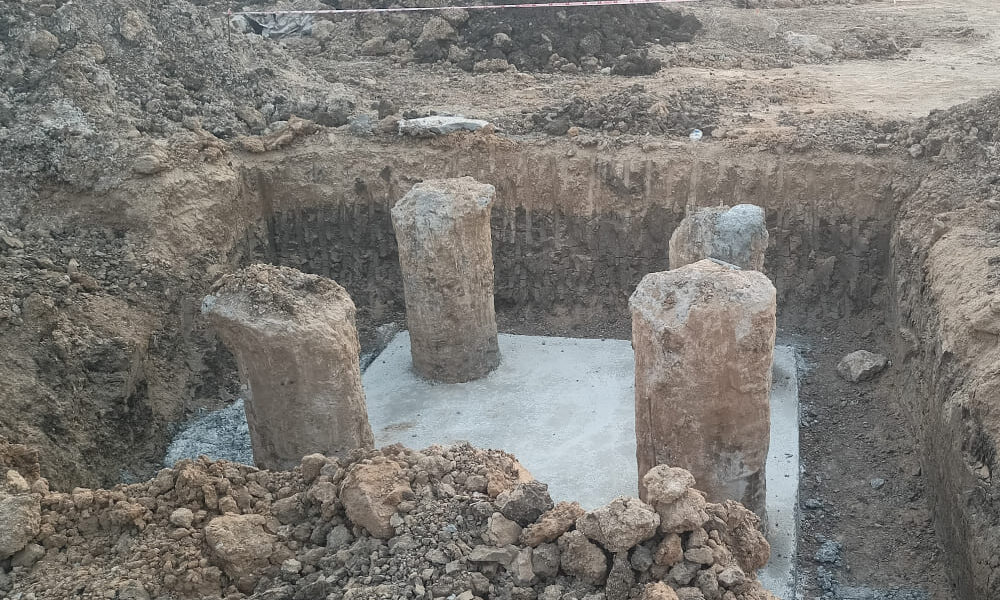
Every successful construction project begins with a strong foundation. When the surface soil cannot safely support a building, engineers rely on foundation piling to transfer structural loads to deeper, more stable soil or rock layers. Foundation piling is widely used in residential, commercial, industrial, and infrastructure projects to ensure long-term stability and safety.
Whether you’re constructing a high-rise building, bridge, warehouse, or industrial facility, choosing the right piling method is essential for the durability of the structure.
What is Foundation Piling?
Foundation piling is a deep foundation technique in which long, strong piles made of concrete, steel, or timber are driven or drilled into the ground. These piles transfer the weight of the building to stronger soil or rock located deep below the surface.
Pile foundations are commonly used where shallow foundations are unsuitable due to weak or loose soil conditions.
When is Foundation Piling Required?
- Surface soil has low bearing capacity.
- Construction involves heavy structures.
- The groundwater table is high.
- The site contains soft clay or loose sand.
- The project requires protection against settlement.
- Bridge, marine, or industrial foundations are being built.
Types of Foundation Piling
1. Bored Cast-in-Situ Piles
Concrete is poured into drilled holes reinforced with steel cages. These piles produce minimal vibration and are ideal for urban construction.
2. Driven Piles
Precast concrete or steel piles are driven into the ground using hydraulic hammers. They are suitable for projects requiring high load-bearing capacity.
3. CFA (Continuous Flight Auger) Piles
These piles are installed using a continuous auger while simultaneously filling the bore with concrete. They are commonly used where low noise and vibration are important.
4. Micropiles
Small-diameter piles used for restricted spaces, foundation strengthening, and renovation projects.
Advantages of Foundation Piling
- High load-bearing capacity
- Suitable for weak soil conditions
- Reduces structural settlement
- Long service life
- Improved earthquake resistance
- Ideal for deep excavations
- Suitable for bridges, towers, and high-rise buildings
Foundation Piling Construction Process
- Site investigation and soil testing.
- Selection of the appropriate pile type.
- Pile layout marking.
- Drilling or driving piles.
- Reinforcement cage installation.
- Concrete pouring.
- Pile integrity testing.
- Construction of the pile cap.
Proper quality control during each stage ensures a safe and durable foundation.
Applications of Foundation Piling
- Residential buildings
- Commercial complexes
- High-rise towers
- Industrial plants
- Warehouses
- Bridges and flyovers
- Metro rail projects
- Water tanks
- Marine structures
- Renewable energy projects
Why Foundation Piling is Important
A strong foundation is essential for the safety and longevity of any structure. Pile foundations minimize settlement, distribute structural loads efficiently, and provide stability even in difficult ground conditions. Investing in professional piling services helps prevent future structural issues and costly repairs.
Conclusion
Foundation piling is one of the most reliable deep foundation techniques used in modern construction. Whether your project involves weak soil, heavy loads, or challenging site conditions, pile foundations provide the strength and stability needed for long-lasting performance. Working with experienced piling contractors ensures quality installation, compliance with engineering standards, and a secure foundation for every structure.
Looking for reliable foundation piling services? DrillWell Solutions provide expert piling solutions for residential, commercial, industrial, and infrastructure projects across Gujarat. Contact our experienced team today for a free consultation and customized foundation piling solution.
👉 Visit: https://drillwellsolutions.com/services/piling-services/